
Gutter Guard Installation Cost in Biloxi: 6 Factors
This guide explains gutter guard installation cost Biloxi MS homeowners ask about: the six factors that set a guard quote — linear feet, guard type, stories, gutter condition and corners — for homes in 39532 and 39530, from pine-heavy Woolmarket to the Popps Ferry corridor, with no invented prices.
The short answer is that gutter guard installation cost Biloxi MS quotes are built from measurements, not picked from a list. The measurer counts your linear feet, notes the guard type that fits your trees, checks stories and roof pitch, inspects the gutters and fascia the guards will fasten to, and counts corners and downspouts. Change any one of those, and the quote changes with it — which is why two Biloxi homes on the same street can get very different numbers for the same job.
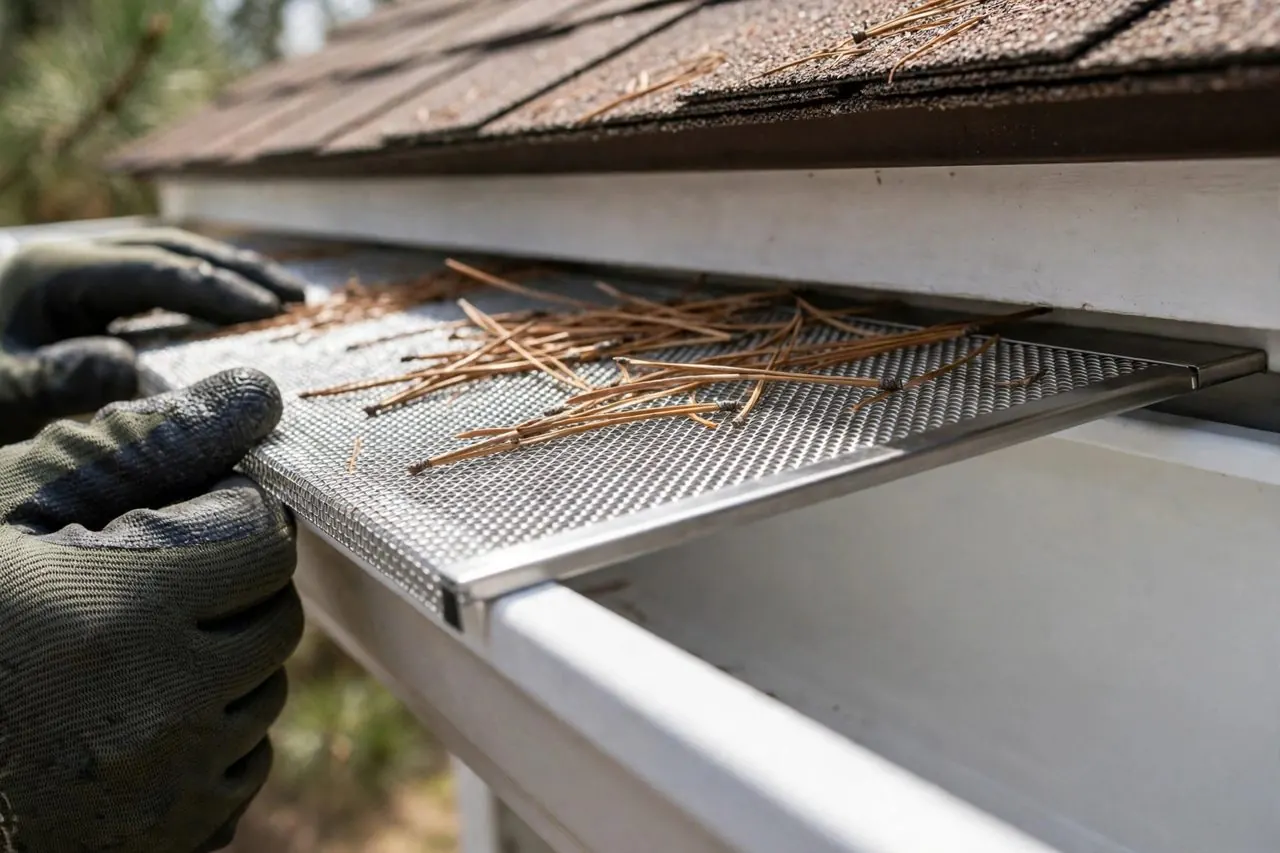
The Six Factors at a Glance
Every honest answer to gutter guard installation cost Biloxi MS comes back to the same six factors. They are listed here in the order they usually move a quote, from the footage everything else multiplies against, down to the extras that only apply to some homes. If a quote you receive does not account for most of them, it was probably guessed rather than measured.
| Factor | What the measurer looks at | Which way it pushes the quote |
|---|---|---|
| Linear feet | Total gutter length around every eave | More feet, higher quote — this is the multiplier |
| Guard type | Micro-mesh, screen, surface-tension or foam | Finer, sturdier products sit higher |
| Stories, pitch and access | Height, roof steepness, ladder placement | Higher and steeper means slower work |
| Gutter and fascia condition | Sag, leaks, soft wood under the fasteners | Repairs come before guards, and add to the job |
| Corners, valleys and downspouts | Fittings, valley volume, outlet count | More fittings, more fitting time |
| Old guards, cleaning and extras | Removal, a clean first, guards on new gutters | Only applies to some homes, but it counts when it does |
None of these is a surprise on its own. The surprise, for most homeowners, is how much they interact: a long roofline under pines on a two-story home with tired fascia is not six small additions, it is six factors compounding. Work through them one at a time and any quote starts to make sense.
1. Linear Feet: the Multiplier Under Everything
Guards are sold by the foot of gutter, not by the square footage of the house, and that distinction is the first thing to get straight. Square footage describes your roof. Guards attach to the gutter, which is a line around the edge of that roof — so the number that matters is how many feet of gutter you actually have. Two homes with identical floor areas can differ by dozens of feet of gutter depending on how the roof is shaped: a long, spread-out ranch carries more eave than a compact two-story, and garage and porch runs add feet that a roof-area guess misses entirely.
You can estimate your own footage from the ground before anyone measures. Walk the house and pace off each straight eave run — front, back, each side, plus the garage and any porch with a gutter above it — then add the runs together. That total is the number every guard quote multiplies, so it is also the number to check first when two quotes disagree: if one measurer counted the garage and the other did not, the quotes were never comparable. Our gutter guard installation page walks through how a professional measurement works, and our installation cost page explains the same per-foot logic for the gutters themselves.
2. Guard Type: the Biggest Choice After Footage
Once footage is fixed, guard type is the lever that moves the quote most. The four types on the market are genuinely different products, not the same product at four prices. Fine micro-mesh blocks pine needles and roof grit while letting water through. Screens block leaves and twigs but pass needles. Surface-tension designs curve water into the trough while shedding debris over the lip. Foam inserts sit inside the trough and block it from within. Each one fits a different tree problem, and each one is built from different material — which is why they sit at different points in the range.
The Biloxi twist is that the cheapest type is often the wrong type here, and the wrong type is the expensive one in disguise. A screen that passes every needle still leaves you paying for cleaning visits to clear what got through, while micro-mesh keeps the needles on top where they dry and blow off. That trade-off is exactly what our gutter guards for pine needles guide tests type by type, and our guard comparison tool lines the types up side by side. When a quote looks surprisingly low, the first question is always which type it names — a low number for foam and a low number for micro-mesh are not the same offer.
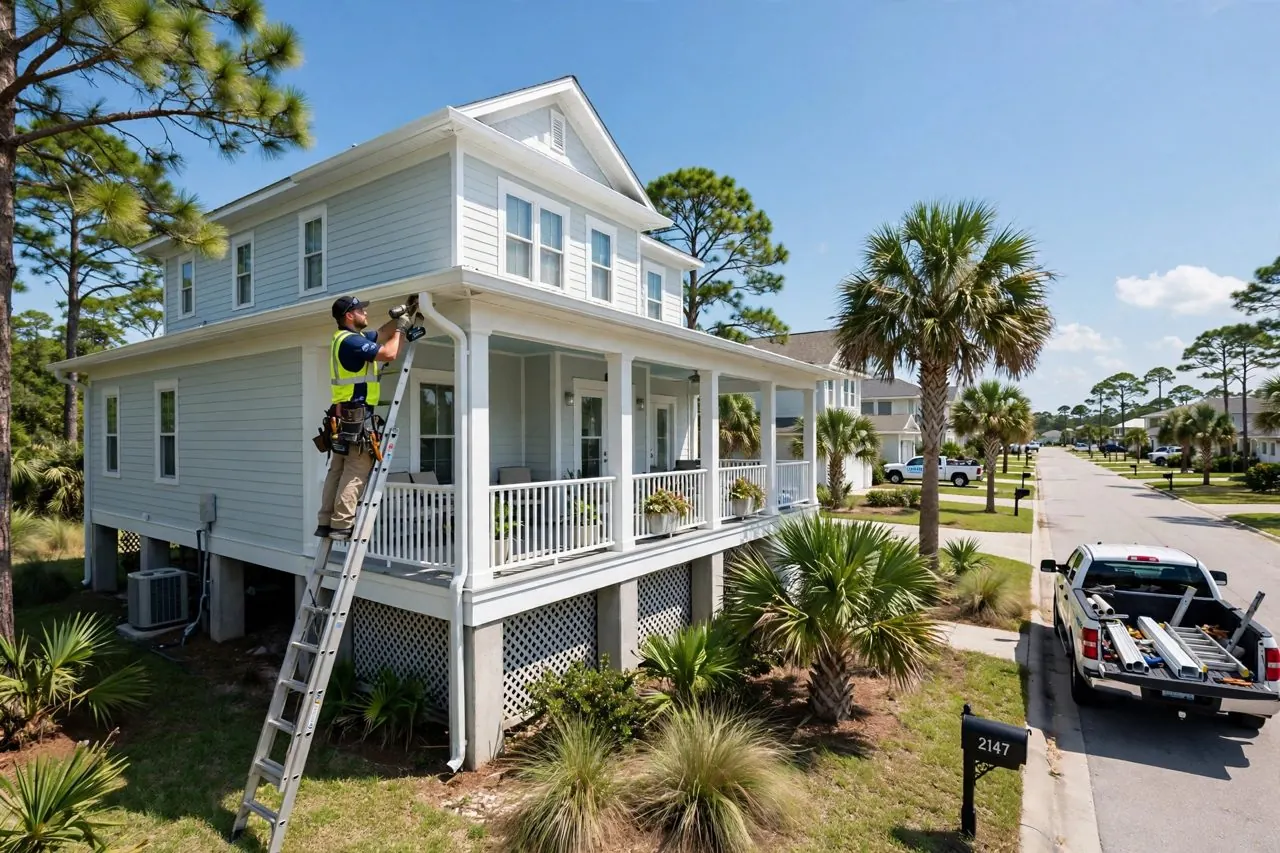
3. Stories, Pitch and Access: How Hard the Eave Is to Reach
Height changes the job even when nothing else does. A single-story eave is reached from a standard ladder setup in minutes; a second story needs taller setups, longer carries of material up and down, and slower, more careful movement along the eave. Steep roof pitch slows the work further, because the crew's footing and ladder placement get more constrained with every degree of slope. Neither factor changes the product — it changes the labor wrapped around it, and labor is a real part of any installed quote.
Access details add their own time. A deck, a fence line, dense shrubs, or a narrow side yard can all limit where a ladder goes, and every repositioning costs minutes that add up across a whole roofline. This is also why a two-story home can quote higher than a larger single-story home next door: the footage is smaller, but the difficulty per foot is greater. If your home has a second story or a steep roof, expect the quote to reflect it — and be suspicious of one that does not mention height at all, because it probably was not measured.
4. Gutter and Fascia Condition: What the Guards Fasten To
Guards fasten to the gutter and the fascia behind it, so both have to be sound before anything goes on. A sagging run, a leaking seam, or soft wood behind the fasteners is not a detail to work around — it is work that comes first. Guards fitted over a failing gutter lid over an active problem: the gutter keeps sagging, the fasteners keep loosening, and the guard comes loose with the gutter it was screwed to. Any honest quote either includes that repair or names it as a separate line; a quote that ignores it is not cheaper, it is incomplete.
This factor also decides the guards-on-old versus guards-on-new question. If the gutters are near the end of their life, fitting guards to them means paying for the guard job and then paying again when the gutters are replaced underneath. In that case the math usually favors new seamless gutters with guards fitted as one project, pitched and sealed as a single system, rather than two separate visits. If the gutters are straight, sealed and pitched right, guards go on the system you already have and this factor barely moves the quote at all. Our gutter cleaning cost guide applies the same factors-only logic to cleaning visits, where condition decides just as much.
5. Corners, Valleys and Downspouts: Where the Fitting Time Goes
Straight runs are fast; everything else is fitting work. Each corner needs a cut, a join and a seal. Each valley concentrates the water of two roof planes into one spot, and the guard there has to handle that volume without overshooting. Each downspout outlet is a fitting of its own, and the count of outlets matters twice over: too few outlets for the roof above them is a capacity problem that guards cannot fix, and adding an outlet is real work with its own line on the quote.
Homes with complex rooflines — multiple gables, dormers, or a garage roof tying into the main roof — carry more of these fittings per foot of gutter than a simple rectangle, and their quotes reflect it. When comparing two quotes, count the corners and outlets each one names. A quote that prices only straight footage and never mentions a corner has left the fiddliest part of the job out of the number, and that part has a way of reappearing later.
6. Old Guards, Cleaning and Extras: the Factors That Only Sometimes Apply
The last factor is really three small ones that only apply to some homes. First, old guards: if a previous set is already on the gutters, it has to come off before the new set goes on, and removal plus disposal is labor that a home without old guards never pays. Second, cleaning: guards go onto a clean system — fitting them over a trough full of debris traps the debris inside, so a cleaning first is part of the job, not an optional extra. Third, timing: guards fitted during a new gutter installation share the ladder setups and the visit with the gutter job, while guards retrofitted to an existing system carry a visit of their own.
None of these should surprise you on the day. A good quote names them when they apply — old-guard removal, cleaning first, retrofit versus new-install timing — so the number you approve is the number you pay. If a quote for a home with old guards never mentions removal, ask where it went: it is either bundled silently, which is fine, or forgotten, which is not.
The Biloxi Pine Factor: Why Type Matters More Here
Every factor above applies anywhere, but Biloxi adds a local weight to one of them: guard type. Longleaf pines shed needles all year, and needles are the debris most guards fail against. A screen with openings wider than a needle passes the needle straight through; foam traps it inside the trough; only fine micro-mesh keeps it on top, where it dries and blows off. That makes the type decision in Woolmarket, along the Popps Ferry corridor, and anywhere else pines overhang the roof, a performance decision first and a price decision second.
It also reframes the cheapest-quote trap. A low quote for a screen under pines buys a product that still needs regular cleaning visits to clear what got through, while a higher quote for micro-mesh buys fewer visits over the years that follow. Neither number is wrong on its own — but only one of them is the price of a solved problem. That is why this guide gives no prices: the right question is never the number alone, it is the number for which type, on how many feet, in what condition.
How to Compare Two Quotes Fairly
Put the two quotes side by side and check the same five lines on each before comparing the totals:
- Guard type, named exactly — micro-mesh, screen, surface-tension or foam. If one quote does not name the type, it cannot be compared.
- Linear feet counted — the same roofline should produce nearly the same footage on both quotes. A big gap means one measurer skipped runs.
- Gutter and fascia repairs — included, listed separately, or confirmed as not needed. Silence here is the most common hidden extra.
- Corners, valleys and outlets — counted and fitted, or priced as straight footage only.
- Cleaning and old-guard removal — named when they apply, so the day-of-visit scope matches the quote.
Three red flags end the comparison early. A single number with no breakdown cannot be checked against anything. A quote given without anyone measuring the roofline is a guess dressed as a number. And a promise that you will never clean again is a promise no guard type keeps — guards change the cleaning from a trough excavation to a surface brush-off, which is a real improvement, but it is not zero maintenance. Any company that tells you otherwise is selling past the product.
When to Call Instead of Comparing From the Ground
Call when the comparison stalls — when two quotes name different types, when the footage counts disagree, or when you suspect the gutters or fascia underneath need work first. When you call about gutter guard installation cost Biloxi MS, bring three things: your rough linear feet from the ground-level walk, the trees over your roof, and whether your gutters sag, leak, or overflow. Those three answers let the visit start with measurement and the fascia check, not with a guess, and the quote that follows will name its type, its footage, and its repairs in writing — the five lines above, filled in for your house.
Frequently asked questions
Do gutter guards cost more for a two-story home?
Usually, yes — and the reason is access and time, not the product. A second story means taller ladder setups, slower movement along the eave, and more care at every corner. A single-story ranch with the same linear feet will almost always quote lower than a two-story home with the same guard type, because the crew finishes it faster.
What guard type affects cost most?
Guard type is the biggest single lever after footage. Fine micro-mesh and surface-tension systems sit at the top end of the range, while screens and foam inserts sit lower. Under Biloxi pines the top end is also the type that actually stops needles, so the cheapest product can turn into the most expensive choice once cleaning visits are counted.
Does gutter guard cost depend on house size?
It depends on gutter length, not square footage. Two homes with the same floor area can carry very different gutter totals — a long, spread-out ranch has more eave than a compact two-story of the same size, and garages and porch runs add feet too. That is why a quote needs a measurement of your roofline, not a guess from your home's size.
Is professional gutter guard installation worth it over doing it yourself?
It depends on the guard type and the height. Simple screens and foam inserts are the most forgiving to fit yourself. Micro-mesh and surface-tension guards are fussier: the fit at corners and valleys, the fastening, and the pitch of the gutter underneath all decide whether they work or leak. On a second story, or with micro-mesh, professional fitting is where the value sits.
Why did my neighbor's guard quote differ from mine?
Because almost every factor differed. Different linear feet, a different guard type, a different number of stories, gutters and fascia in different condition, and a different count of corners and downspouts — any one of those moves the number, and together they can move it a lot. Two quotes are only comparable when they name the same guard type and the same footage.
Want a quote built from your roofline?
Call for a measurement anywhere in Biloxi — from pine-heavy Woolmarket to the Popps Ferry corridor. The quote names its guard type, its footage, and any repairs first.
Call (228) 888-8061Related: Are gutter guards worth it? · Gutter installation in Biloxi, MS