
When Is the Best Time to Install Gutters in Biloxi?
This guide to the best time of year to install gutters in Biloxi sorts the calendar by what a Biloxi roof faces: hurricane season, pine-needle drop, summer heat, and winter rain. From Woolmarket's pine lots to the Back Bay shoreline, homes in 39532 and 39530 share the same best window.
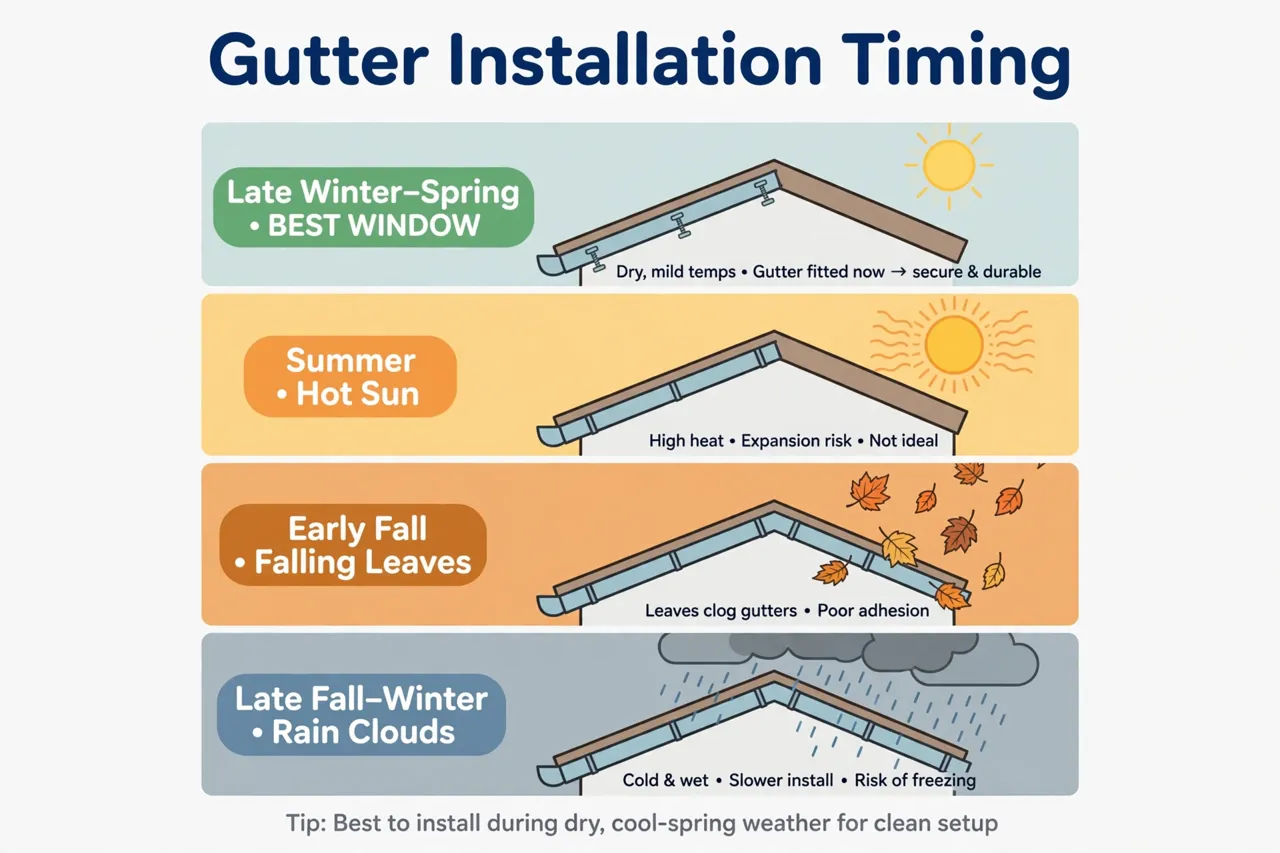
The short answer is that the best time of year to install gutters in Biloxi is late winter through spring, with early fall as the second window. A spring install is measured, hung, and water-tested before hurricane season opens in June, so the first real test is a controlled one, not a storm. Early fall works the same way in reverse: the system goes up after storm season and before the heavy pine-needle drop. Any season beats waiting while a failing system keeps sending water where it should not go.
Why Biloxi's calendar is not the national calendar
Most timing advice is written for leaf fall and snow load. Biloxi's year runs on a different set of pressures, and each one pushes the best window in a different direction. Hurricane season runs June through November, so the months before it are preparation and the months inside it are reaction. Longleaf and loblolly pines drop needles steadily rather than in one autumn week, so a system installed just before the heaviest drop starts its life already collecting debris. Summer brings heat and afternoon storms that interrupt work without damaging the product. Winter on the Coast is not a freeze problem — hard freezes are rare here — but steady rain and short days that slow the schedule. A timing guide that only mentions leaves and ice misses all four, and a booking plan built for another climate will always be a season behind.
The practical point is simple: the best window is the one that puts a tested system on the house before the weather that tests it. Everything below is judged against that standard, not against which month feels most convenient.
The four windows, judged for Biloxi
The best time of year to install gutters in Biloxi is not one month circled on a calendar — it is a ranking, and the ranking changes if your gutters are already failing. Here is each window on its own terms.
1. Late winter through spring: the best window
This is the sweet spot, and the reason is the calendar rather than the weather alone. Mild temperatures make for comfortable, unhurried work, rain interruptions are usually brief, and the finished system gets its water test weeks before hurricane season opens. Spring is also when problems found over winter — a run that sagged under wet debris, fascia that softened behind an overflowing trough — can be fixed as part of the new install instead of discovered mid-storm. The one cost of spring is demand: it is the most popular window precisely because it is the best one, so booking a few weeks ahead matters more here than in any other season.
2. Summer: workable, but plan around heat and storms
Summer installs are routine and the product is unaffected — seamless aluminum formed on site does not care what month it is. What changes is the working day: early starts to beat the heat, and afternoon storms that can pause a job or push it to the next dry stretch. A summer booking with a flexible week or two of dates goes smoothly; a summer job that must happen on one specific day is at the mercy of the forecast. Summer is also the season when an undersized or failing system shows itself most plainly, because Gulf downpours expose overflow and lost pitch in a single afternoon. That diagnosis value is real, but it is a reason to have acted in spring, not a reason to prefer summer.
3. Early fall: the second window
Early fall earns second place for two reasons. First, it follows storm season, so it is the natural moment to replace a system a storm exposed — and to do it before the next season rather than after another winter of it. Second, it precedes the heaviest pine-needle drop, so a new system with guards decided at install time starts clean rather than starting clogged. The catch is timing within fall itself: early fall is a window, late fall is a gamble. Once needle drop is heavy and steady rain sets in, a new install spends its first weeks collecting debris instead of proving its drainage, and scheduling stretches as storm-repair work continues.
4. Late fall and winter: still installed, with eyes open
Gutters are installed year-round in Biloxi, and winter here does not stop the work the way a northern freeze would. The honest trade-offs are steadier rain, shorter days, and a schedule that moves at the weather's pace rather than yours. A winter install is a good install when the system is sized right, hung with the correct pitch, and water-tested on the day — the season does not change any of those steps. What winter does not do is forgive delay: a run that is already pulling away or sending water behind the fascia will not improve over a wet winter, and the fascia damage found in spring is often the damage winter rain caused while the decision waited.
| Window | Biloxi conditions | Verdict |
|---|---|---|
| Late winter–spring | Mild weather, system tested before June hurricane season, ahead of needle drop | Best window — book a few weeks ahead |
| Summer | Heat and afternoon storms interrupt work; product unaffected | Workable with flexible dates |
| Early fall | Post-storm replacement moment, before heavy needle drop | Second window — act early in fall |
| Late fall–winter | Steady rain, short days; freezing rare on the Coast | Installed year-round; do not let a failing system wait it out |
Three timing traps worth avoiding
The first trap is waiting for a storm to decide. A system that overflows in a downpour has usually been failing quietly for seasons — lost pitch, a choked outlet, hangers worked loose — and the storm is only the first day anyone watched it. Our overflow guide walks through the five causes in check order, and any of them found in spring is a cheaper fix than the same cause found after it has soaked fascia all summer.
The second trap is installing right before needle drop without deciding on guards. A new system under Woolmarket pines or the pine-heavy streets off the Back Bay starts collecting needles the week it goes up, and the first cleaning then arrives sooner than expected. Deciding guards at install time — our gutter guard installation page explains which types hold up under pine load — is a timing decision as much as a product decision, because it sets the cleaning rhythm for the system's first year.
The third trap is sequencing: gutters before a planned roof. Gutters hang from the fascia at the roof's edge, so a new roof after a new gutter install means removing and re-hanging a system that was just paid for. When a roof replacement is already on the calendar, roof first, then gutters, then the water test — the order our roof-and-gutters guide and our new-construction service both follow. When no roof work is planned, there is no sequencing reason to wait.
What does not change with the season
It is worth saying plainly, because timing advice sometimes implies otherwise: the install itself is the same job in every season. The roofline is measured, the fascia is checked and repaired first where it is soft, the seamless trough is formed on site to the run's length, hangers go into solid wood at spacing set for the load, pitch is set to fall toward the downspout, and the finished system gets a water test before the crew leaves. That sequence is what our seamless gutter installation service does in March and in November alike, and it is why a winter install from a careful crew outlasts a spring install from a rushed one. Season chooses the schedule; workmanship chooses the result.
The same holds for sizing. A run's size follows its roof — valleys, roof area, and downspout outlets — not the month, and the parts guide names each piece that sizing decision touches. If a quote changes with the season, the thing changing is availability, not the gutter.
When not to wait for the best window
Three signs override the calendar entirely. Water running behind the gutter and down the wall means the support or the fascia has already failed, and the next heavy downpour can finish the job. A run visibly pulling away from the fascia is a section at risk of coming down, not a cosmetic dip. And water pooling near the foundation after rain means the system is no longer doing the one job it exists to do. Our sagging guide separates a watch item from an urgent one, and a gutter cleaning visit settles whether the problem is debris or the system itself. Any of these three is a call now, in whatever month you notice it — the best time of year to install gutters in Biloxi is always before the damage they were meant to prevent.
Frequently asked questions
What month is best for installing gutters in Biloxi?
Late winter into spring is the strongest answer — roughly late February through May. The weather is mild enough for comfortable, unhurried work, the system is in place and tested before hurricane season opens in June, and you are ahead of both the summer storm rush and the autumn needle drop. If your gutters are failing, though, the best month is the month you call: a failed system does not improve by waiting for spring.
Can gutters be installed in the summer in Biloxi?
Yes. Summer installs are routine; the trade-offs are heat and afternoon storms rather than any problem with the gutters themselves. Crews typically start early, and a passing storm can pause work or push a job to the next dry stretch, so summer bookings need a little more flexibility in the schedule. Sealant and fasteners are not the issue — the work is the same forming, hanging, and water test as any other season.
Is it a bad idea to install gutters during hurricane season?
It is not a bad idea, and it is often the moment people finally act — a storm exposes the failure. The honest caveat is scheduling: during and just after a major storm, repair demand surges and booking windows stretch, so a planned replacement booked in spring will almost always happen sooner and calmer than the same job booked mid-storm-season. If you install during the season, the new system should still be water-tested on the day, not left to its first storm to prove itself.
Should I wait to install gutters until after a new roof?
Yes, when a new roof is already planned. Gutters hang from the fascia at the roof's edge, so roofing first and gutters second avoids removing and re-hanging a brand-new system. When the roof is not being replaced, there is no reason to wait: the existing fascia is checked during the gutter visit, and any soft boards are repaired before the new hangers go in. Our roof-and-gutters guide walks through the sequencing and the cases where waiting is the smarter move.
How far ahead should I book a gutter installation in Biloxi?
Book a few weeks ahead of the window you want, and further ahead in the two busy stretches: spring, when everyone plans before hurricane season, and the weeks after a major storm, when repair calls flood in. A planned job with a flexible week or two of dates is easier to place than a job that must happen on one specific day. If water is already reaching the foundation or a run is pulling away, say so when you call — urgency moves a job up the list ahead of a routine replacement.
Planning an install — or watching a failing run?
Call for a measurement anywhere in Biloxi, from Woolmarket to Back Bay. A spring booking, a fall replacement, or an urgent fix — the visit settles sizing, fascia, and pitch first, whatever the season.
Call (228) 888-8061Related: Why do gutters overflow in Biloxi? · Why are my gutters sagging in Biloxi? · Signs you need new gutters · Gutter installation in Woolmarket · Gutter installation in Biloxi, MS