
What Color Should Your Gutters Be in Biloxi?
This guide to what color should gutters be in Biloxi starts where the decision starts: with the house, not a color chart. From Woolmarket pines to the Back Bay shoreline, homes in 39532 and 39530 show why one color disappears on one house and frames another.
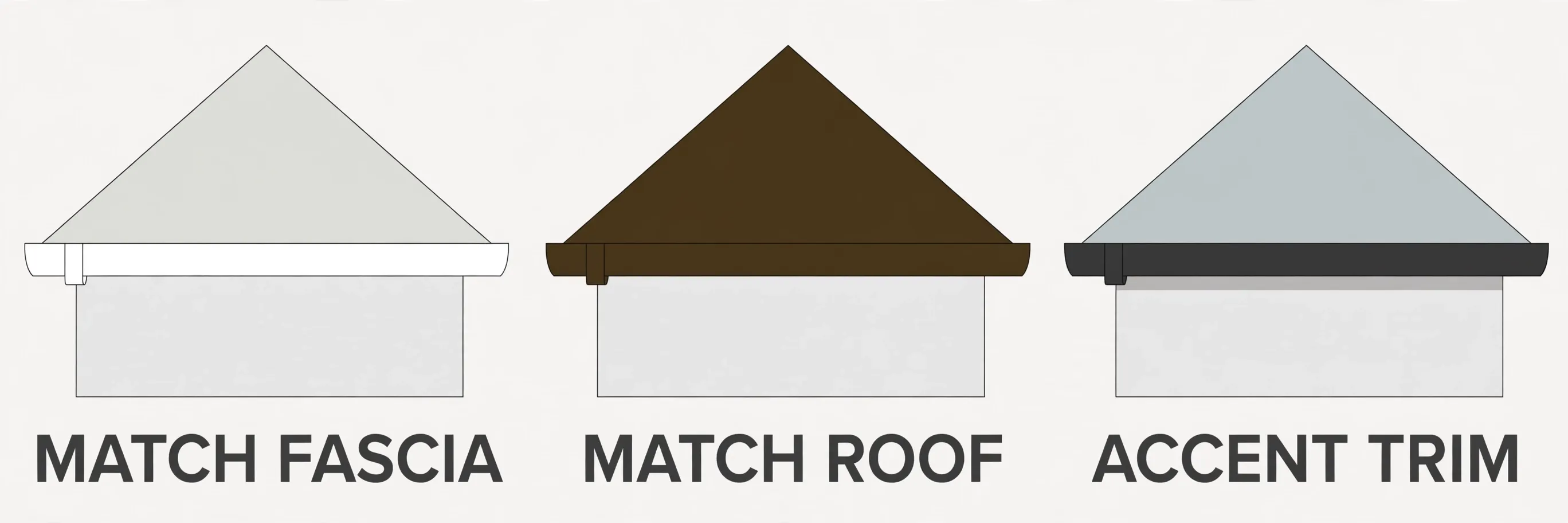
The short answer to what color should gutters be in Biloxi is: match the fascia if you want the gutter to disappear, match the roof if you want it quieter still, or match the trim if you want the roofline framed. Most Biloxi homes land on one of those three, and the rest of the decision — dirt, sun, downspouts, and any neighborhood or historic-district rules — only narrows which one fits your house.
First, decide the job the color has to do
Color choice sounds decorative until you stand in the driveway holding samples. A gutter is a long horizontal line at the top of every wall, so its color either blends that line away or turns it into trim. Neither is wrong, but they are different jobs, and picking without choosing the job first is how a house ends up with gutters that fight the rest of the exterior.
The blend job is the safer default. When the gutter shares a color with the board it hangs on, the eye reads roofline, fascia, and gutter as one band, and the house's other features — the porch, the windows, the door — do the talking. The framing job is deliberate contrast: a dark gutter on a light house outlines the roof the way trim outlines a window, and on a home with a strong modern or high-contrast exterior that outline can be the point. Problems start when the choice is accidental — a color picked from a chart in a showroom, or the color the last house on the street happened to have, with no thought about which job it was supposed to do on this house.
Read the house from the top down before choosing. Start at the roof, because the gutter runs directly beneath it and the roof is usually the largest color mass on the house. Then the fascia and trim, then the siding or brick, then the shutters, door, and other accents. The anchor you pick should be one of those layers, not a color invented for the gutter alone — a gutter color that repeats something already on the house always looks more settled than one that introduces a new color the house has nowhere else.
The three approaches, and when each one wins
Almost every gutter color decision comes down to three approaches, and the table below is the whole choice before the detail. The right row depends on which layer of your house is strongest and whether you want the gutter to disappear or to frame.
| Approach | What it looks like | When people pick it |
|---|---|---|
| Match the fascia | Gutter and fascia read as one band | The cleanest, most flexible default; strong existing trim package |
| Match the roof | Gutter folds into the eave shadow line | Roof dominates the house, or the fascia is thin or mixed |
| Match the trim or siding | Gutter frames the roofline, or downspouts vanish into the wall | Deliberate contrast, or downspouts that need to disappear |
Match the fascia: the built-in look
This is the approach most installers reach for first, and for a simple reason: the gutter mounts along the fascia board, so matching that board makes the gutter look like part of the house rather than an addition to it. On a Biloxi home with white or cream fascia, white gutters reinforce the trim language already carried by the windows and corner boards, and the roofline reads as one crisp outline. Where the fascia is a warm cream rather than a pure white, an almond or linen tone softens the edge without breaking the band — pure white against warm cream can look sharp in a way that feels like a mistake rather than a choice.
Match the roof: the quiet roofline
Matching the roof has a more subtle effect than matching the fascia. A dark bronze or charcoal gutter under a dark roof creates a continuous shadow line at the eaves, and the gutter stops drawing the eye at all. This is the right move when the roof is the dominant visual feature of the house, or when the fascia itself is a mixed or unremarkable color that gives nothing to match. It is also the forgiving move on a long roof plane: a gutter that disappears into the eave line never competes with the roof for attention.
Match the trim, or let the downspouts go their own way
The framing approach treats the gutter as trim. Black or charcoal gutters on a white or light-gray house outline the roofline deliberately, the same way black window frames outline a window, and on a modern exterior that outline can sharpen the whole house. The same logic applies in reverse to downspouts: a downspout runs down a wall, not along a roofline, so matching it to the siding or brick it crosses usually hides it better than matching it to the gutter color. Many homes end up with the gutter in a fascia or roof color and the downspouts in a siding color, and that split looks intentional because each piece blends with the surface directly behind it. What looks accidental is a downspout in a bright contrasting color running down an otherwise quiet wall — check the downspout color as its own decision, not as an afterthought to the gutter.
What color should gutters be in Biloxi, house by house
The three approaches only become a decision when they meet an actual house. The patterns below are the ones that come up most often across Biloxi's confirmed service areas, from the older coastal stock to the pine-heavy neighborhoods inland.
A white-trim coastal home — white windows, white fascia, light siding — is the classic white-gutter house. White reinforces the trim package and keeps the roofline clean, and on a home near the Back Bay shoreline or in Downtown and Old Biloxi, where the trim is often the strongest architectural feature, white is rarely the wrong answer. The trade-off is maintenance, covered below: white shows dirt first.
A brick or earth-toned home usually wants bronze or brown. Brick already carries warm, varied color, and a dark bronze or musket-brown gutter sits against it the way trim sits against siding — present, but not competing. A stark white gutter on a warm brick house can look like a stripe drawn across the top of the wall, especially where the roof is also warm-toned. If the brick is pale or the trim is already cream, almond or linen can be the middle path: warm enough to sit with the brick, light enough to keep the roofline open.
A gray or modern home turns on undertone, not on gray itself. Cool gray siding usually looks cleaner with white, charcoal, or black gutters, while warm gray — the kind that leans toward beige — pairs better with cream, linen, or bronze. This is the house where holding a sample against the siding in daylight matters most, because two grays that look identical on a chart can read warm and cool side by side on a wall, and the gutter is long enough that a wrong undertone shows along the whole elevation.
A home under heavy pines, like many Woolmarket lots, has a practical color question on top of the visual one. Pine needles and the staining they leave show fastest on white, and a trough that looks dirty between cleanings is a trough that looks neglected even when it is draining fine. That does not rule white out — a white-trim pine-country home can still carry white gutters well — but it means the color decision and the gutter cleaning rhythm belong in the same conversation, not in separate ones.
A home in a historic district or a neighborhood with exterior rules needs one check before any of this: ask whether the color is restricted. Downtown and Old Biloxi homes can sit under historic-district review, and some neighborhoods govern exterior colors through their own rules. A color that is perfect on an unrestricted street can be the wrong answer where an approved list applies, so confirm the rule first and choose inside it — the three approaches still work, they just work from a shorter list.
The practical side: dirt, sun, and Biloxi weather
Color is not purely decorative on the Gulf Coast, because the climate works on the finish every day. Three practical factors deserve as much weight as the visual match.
Dirt visibility is the first. Light colors — white, eggshell, pale cream — show runoff streaks, pine staining, and the dark striping that runs down a gutter face far sooner than dark colors do. Dark bronze, brown, charcoal, and black hide that accumulation between cleanings, which is a real advantage in a city where steady pine drop and heavy rain keep troughs dirty most of the year. If you choose white, choose it knowing it asks for more frequent washing to keep looking the way it looked on installation day.
Sun and heat are the second. Dark finishes absorb more solar radiation than light ones, so a dark gutter runs hotter in full sun, and heat plus strong ultraviolet light is harder on any painted surface over time. Factory-finished aluminum coil is made for outdoor exposure, so this is a long-term aging question, not a one-summer fading question — but a south- or west-facing run in full Biloxi sun will show its age sooner in charcoal than the same run would in white. Weigh that against the dirt advantage honestly: dark hides dirt and ages a little faster in sun; light shows dirt and stays cooler. Neither side wins on both counts.
Salt air is the third, and it is the one color cannot fix. Salt air ages the system underneath the color — fasteners, fascia, and the metal itself — which is why the color decision should come after the sizing and condition decisions, not before them. A gutter in the perfect color that is undersized for the roof above it, or hung on soft fascia, is still a failing gutter. Get the profile right first — our 5-inch vs 6-inch guide explains when Biloxi roofs need the larger profile — then choose the color for the system that is actually going to last.
Choosing without regret: the sample test
Printed charts and phone screens lie about color. A swatch that looks warm under showroom light can read cold against your siding at noon, and a color that looks perfect on a small chip can feel heavy stretched along a forty-foot run. Before committing, hold a physical color sample against the fascia and the siding in daylight, then step back to the street and look at the whole elevation. The street view is the view that matters: nobody experiences a gutter color from six inches away, and a color that is subtle at arm's length can still read as a stripe from the driveway.
Ask at the free measurement which colors are actually available for the system being installed, rather than assuming every color on a manufacturer's chart is on the truck. Factory color charts run well beyond white and brown, but availability varies by material and profile, and the honest answer at measurement beats a chart promise that narrows later. The same visit is the moment to settle the downspout question — gutter color, downspout color, and whether they match — because that decision is much harder to change once the metal is formed.
Finally, keep color in its place in the decision order, because that order is the honest answer to what color should gutters be in Biloxi: a color that repeats something already on the house, chosen after the system underneath it is sound. Material comes first — our aluminum vs vinyl vs steel guide explains why aluminum is the usual answer for a full Biloxi replacement — then size and profile, then guards if the house sits under pines, then color. A color choice made in that order is a finishing decision on a sound system; a color choice made first is a gamble that the system underneath it will hold up. If you are replacing, the seamless gutter installation service is where size, profile, and color are settled together, and the fascia and soffit repair page covers the wood the color will hang on.
Frequently asked questions
Should gutters match the roof, the trim, or the fascia?
Start with the fascia, because the gutter hangs on it. When the gutter and the fascia share a color, the roofline reads as one clean band and the gutter almost disappears. Matching the roof is the quieter choice still: it folds the gutter into the shadow line under the eaves. Matching the trim is the framing choice, useful when the windows and corner boards already carry a strong trim color. There is no rule that picks one for every house; the right anchor is whichever element you want the eye to follow.
Should downspouts be the same color as the gutters?
Usually, but not always for the same reason. Gutters match what they hang on, and downspouts run down a wall, so a downspout matched to the siding or brick it crosses tends to disappear better than one matched to the roofline color. Many homes end up with the gutter in a fascia or roof color and the downspout in a siding color, and that split looks deliberate rather than mismatched, because each piece blends with the surface behind it.
Which gutter color hides dirt best in Biloxi?
Darker colors hide dirt, pine-needle staining, and the streaking that runs down a gutter face far better than white or pale cream. That matters in Biloxi, where steady pine drop and heavy rain keep troughs dirty between cleanings. White still works on a home with a strong white trim package, but it shows every mark sooner, so it asks for more frequent washing to keep looking crisp.
Do dark gutters fade faster in Biloxi sun?
Dark finishes absorb more heat than light ones, and heat plus strong sun is harder on any painted surface over time. Factory-finished aluminum coil is made for outdoor exposure, so a dark gutter does not simply wash out in a season, but a south- or west-facing run in full sun will show age sooner than a shaded run in the same color. If a dark color is the look you want, accept that trade-off up front rather than discovering it later.
Can existing gutters be painted a different color?
Painting is possible, but it is a different result from a factory finish. A painted gutter needs a clean, sound surface and proper preparation, or the new coat peels where water and sun work on it, and repainting rarely matches the durability of the original baked-on finish. When the gutters themselves are near the end of their life, or the color change is the reason for the job, replacing in the chosen color usually gives the cleaner, longer-lasting result.
Not sure which color fits your house?
Call for a measurement anywhere in Biloxi — from Woolmarket to Back Bay. Bring the fascia, roof, and siding colors you already have; the visit settles size and profile first, then the color that disappears or frames best on your house.
Call (228) 888-8061Related: Aluminum vs vinyl vs steel gutters in Biloxi · 5-inch vs 6-inch gutters in Biloxi · Why are my gutters sagging in Biloxi? · Gutter installation in Woolmarket · Gutter installation in Biloxi, MS