
Aluminum vs Vinyl vs Steel Gutters in Biloxi
Aluminum vs vinyl vs steel gutters Biloxi MS is the material decision behind replacement quotes: aluminum resists rust, vinyl costs least upfront, and steel is strongest — but Gulf rain, salt air, summer heat, and pine debris in Woolmarket and Back Bay, 39532 and 39530, change how each one ages.
The short answer is that aluminum vs vinyl vs steel gutters Biloxi MS buyers compare usually resolve in favor of aluminum for a full replacement, because it is the only one of the three that is light, rust-resistant, and formable seamless on site. Vinyl wins on upfront cost and loses on Gulf heat and lifespan. Steel wins on strength and loses on weight, coating upkeep, and rust risk once its coating is damaged. The rest of this guide tests each material against the five Biloxi conditions that actually age a gutter: salt air, heat and sun, Gulf downpours, pine debris, and storm damage.
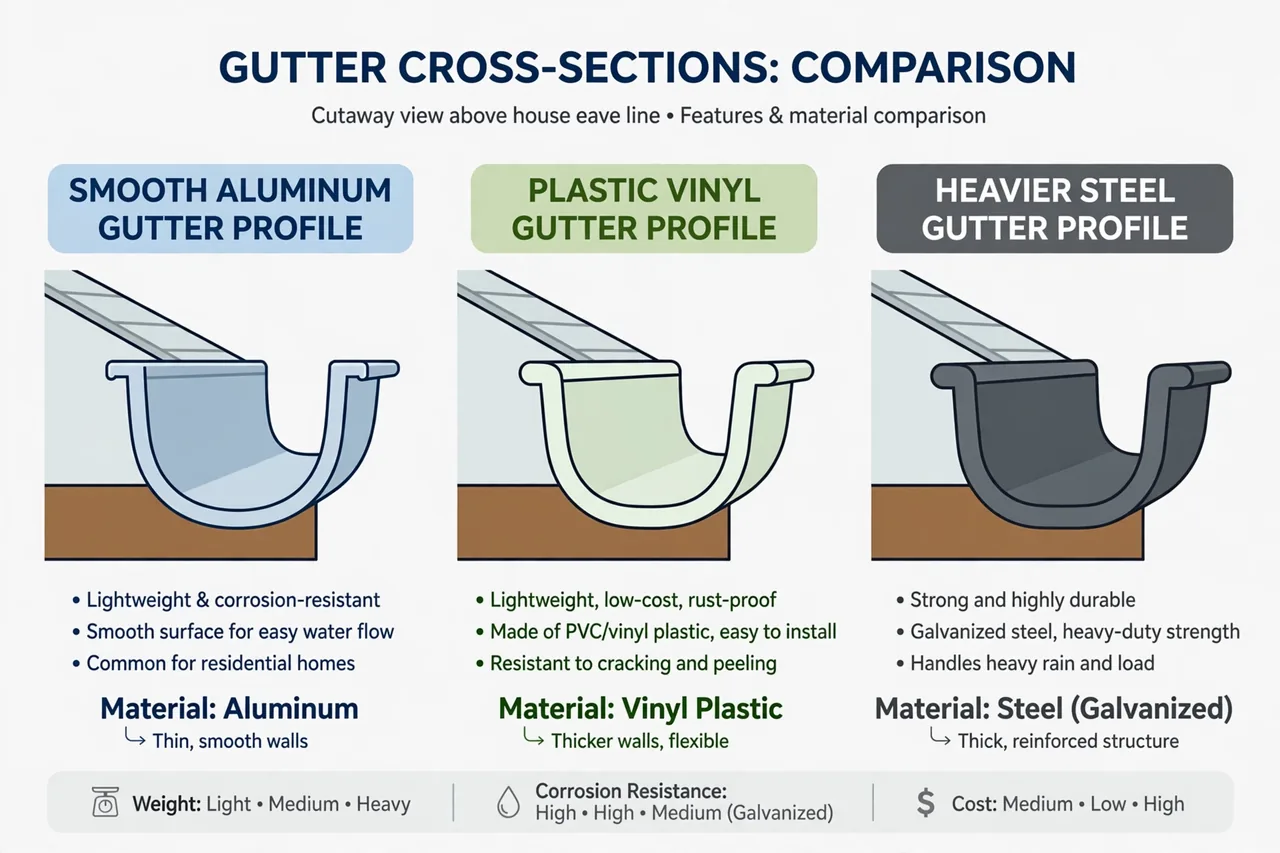
What Each Material Actually Is
Aluminum is a light metal, formed for gutters either as seamless runs made on site from coil stock or as sectional lengths joined on site. It does not rust, it takes a baked-on color finish well, and it is light enough that one crew can handle a long run without heavy lifting equipment. Its weaknesses are denting and thin-gauge quality: a thin, cheap aluminum run dents easily and can bow between hangers when it is full of wet debris, so gauge and hanger spacing matter as much as the material name.
Vinyl is plastic — PVC — manufactured in pre-formed sectional lengths and snapped or glued together on site. It can never be seamless, because it is made in a factory in fixed lengths, not formed at your house. It never rusts and never needs painting, and it is the lightest and cheapest of the three, which is why it is the common do-it-yourself choice. Its weaknesses are the ones that matter most in Biloxi: heat, sun, and age make it warp, sag, and turn brittle, and a brittle section cracks instead of flexing when it is hit or stressed.
Steel for gutters usually means galvanized steel — steel coated in zinc to slow rust — formed in sections and joined on site. It is the strongest of the three by a clear margin: it resists dents from branches and ladders that would mark aluminum, and it holds its shape on long spans. Its weaknesses are weight and coating dependence. It is heavy, so it needs stronger hangers spaced closer together and solid fascia to hang from, and once the zinc coating is scratched, chipped, or worn through, the steel underneath rusts — fastest where water stands and salt air reaches it.
The Comparison, Side by Side
Here is the whole aluminum vs vinyl vs steel gutters Biloxi MS decision on one table, before the detail. The Biloxi column is the one that changes the national comparison: a material that is fine in a mild, dry climate can be a poor choice on the Gulf Coast, and a material that looks expensive on paper can be the cheaper one over the life of the house.
| Factor | Aluminum | Vinyl | Steel (galvanized) |
|---|---|---|---|
| Rust | Does not rust | Does not rust | Rusts once coating is damaged |
| Weight | Light | Lightest | Heavy — needs stronger hangers |
| Strength / dents | Dents most easily | Cracks when brittle; resists small dents | Strongest; resists dents |
| Gulf heat and sun | Holds up well | Warps, sags, turns brittle over time | Holds up, but expands and contracts more |
| Seamless option | Yes — formed on site | No — sectional only | Rarely; usually sectional |
| Upkeep | Cleaning and inspection | Cleaning, plus sag and crack checks | Cleaning, plus coating and rust checks |
| Upfront cost factors | Middle | Lowest | Highest of the three in most quotes |
The Five Biloxi Tests
1. Salt air
Homes near the beachfront and the Back Bay side breathe salt air all year, and salt speeds corrosion wherever water and bare metal meet. Aluminum handles this best of the three in practice: it forms its own protective oxide layer and does not rust, though a poor finish can pit over a long time. Vinyl is untouched by salt, which is a genuine advantage, but salt is not what ends a vinyl system — heat is. Galvanized steel is the weak one here: salt attacks the zinc coating, and any scratch, fastener hole, or worn spot becomes a rust site that spreads under the coating where you cannot see it until it breaks through.
2. Heat and sun
A Biloxi gutter spends its summers in strong sun and high heat, and that is the test vinyl fails. Plastic softens and moves with temperature, so a vinyl run that looked straight at installation can sag between hangers, pull at its joints, and grow brittle with age — and a brittle run cracks under a ladder foot or a falling branch instead of denting. Aluminum and steel both handle heat structurally; aluminum expands and contracts with temperature, which is why hangers and expansion room matter, and steel moves more, which stresses its joints. Neither metal goes brittle in Gulf heat, which is why both outlast vinyl here even though vinyl never rusts.
3. Gulf downpours
Material does not set capacity — size and downspouts do — but material does set what happens when a downpour hits a system that is already dirty or slightly damaged. A metal trough keeps its shape under a full load of water; a sagging vinyl run holds water in its low spots, and standing water adds weight, which deepens the sag. A steel trough holds its shape best of all, which is why steel still has a case on long, valley-fed runs. But a downpour also exposes the joint problem: vinyl and most steel systems are sectional, so a heavy rain tests every joint at once, while a seamless aluminum run tests only its corners and outlets. Our seamless vs sectional guide covers that joint story in full, and it applies to material choice too, because the material you pick often decides whether seamless is even available.
4. Pine debris
Under Biloxi pines, needles and roof grit collect in every trough regardless of material, and the material question becomes how the trough behaves when it is full and wet. A full aluminum run is light enough that good hangers carry it, but thin aluminum can bow if hangers are spaced too far apart — gauge and spacing are part of the quote to ask about. A full vinyl run sags more, because the material itself flexes under wet debris weight, and sagging changes pitch, which leaves standing water, which breeds mosquitoes and adds more weight. Steel carries a full load without bowing, but its joints and coating still need the same cleaning rhythm. No material removes the cleaning job; the gutter cleaning service exists because debris, not material, is what fills a trough.
5. Storm damage and repair
After a storm, the repair story splits by material. A dented aluminum run can often be left alone if the dent is small, patched if it narrows the trough, or replaced as a run if the damage is long — and a seamless run means a longer replacement piece. A cracked vinyl section is the easiest single repair of the three: swap that section and move on, which is vinyl's one genuine repair advantage. A dented steel run usually keeps working, because steel dents less and a dent rarely narrows the trough, but a steel section that has started to rust is not a patch job — rust in the trough means the section is thinning and the replacement question is already on the table. If storm damage is your starting point, our overflow diagnosis post helps separate a material failure from a pitch, clog, or downspout failure before you pay for either.
Cost Factors: What Moves the Quote for Each Material
No dollar figures are quoted here, because a real quote is built from your footage, stories, roof complexity, and fascia condition, and any post that prints one number for every home is guessing. The gutter installation cost guide treats cost as factors for the same reason, and material is one factor among several — footage, stories, roof complexity, gutter condition, and type all move the number.
Vinyl starts lowest because the sections are cheap and the fitting is simple, and that is where its price advantage ends. A vinyl system that needs sections replaced, re-hung for sag, or replaced entirely years before a metal system would is not the cheap option over the life of the house — it is the cheap first purchase. Aluminum sits in the middle on day one and asks the least afterwards: cleaning, inspection, and occasional corner or outlet resealing, with no coating to maintain and no rust to chase. Steel starts highest of the three in most quotes — heavier material, stronger hangers, closer spacing, more labor to handle — and then asks for coating and rust checks for as long as it stands, which is a standing maintenance item aluminum simply does not have. For a home you plan to stay in, the honest comparison is first cost plus upkeep plus replacement timing, not first cost alone.
Which Material Fits Which Biloxi Home?
For a full replacement on a home you plan to stay in, aluminum — seamless, formed on site — is the usual answer, and the case is strongest where Gulf conditions are the main test: beachfront and Back Bay homes in salt air, homes under pines, and long roof planes where a sectional system would carry a joint every few feet. Our seamless gutter installation service is that system, sized from your roof plan with 6-inch runs and larger downspouts where the roof needs them — size is a separate decision from material, and our 5-inch vs 6-inch guide explains when Biloxi roofs need the larger profile.
Vinyl fits narrow cases: a tight budget where the choice is vinyl now versus living with a failing system, a detached garage or outbuilding where appearance and long-term upkeep matter less, or a short stay where you will not be the one paying for the replacement. It also fits as a holding repair — replacing the worst section while planning a full metal replacement later. What does not fit is replacing an entire failing vinyl system with another full vinyl system on a Biloxi home and expecting a different result in the same heat and sun.
Steel fits narrower cases still: a long span where aluminum would bow, a place where branches or ladders keep denting aluminum, or a building where impact strength matters more than weight and coating upkeep. If you are quoted steel, ask two questions before anything else: is it galvanized or stainless, and what does the coating upkeep look like over the next decade? A galvanized quote that never mentions coating checks is not a complete quote. And if you already have steel gutters that are rusting at the seams or in the trough, that rust is the system telling you its coating has given out — patching over rust does not restore the coating underneath.
One more honest limit: material will not fix a bad installation. A perfectly chosen material hung with the wrong pitch still overflows, a system with too few downspouts still backs up, and hangers screwed into soft fascia still pull out. When you compare quotes, compare the material and the installation details together — footage, size, downspout count, hanger type and spacing, and whether fascia work is included, separated, or confirmed as not needed.
When to Call Instead of Deciding From a Quote
Call when the material decision stalls — when one quote names aluminum and another names steel, when your existing vinyl is sagging and you are unsure whether to repair or replace, or when rust is showing on a steel system and you need to know whether it is surface staining or trough failure. When you call about aluminum vs vinyl vs steel gutters Biloxi MS, bring three things: what material you have now, where it is failing, and how long you plan to stay in the home. Those three answers settle repair versus replacement first, and the material decision follows from them — not the other way around. For homes in Woolmarket, Back Bay, and every Biloxi neighborhood in between, the measurement visit settles size, pitch, and downspouts for the roof you actually have.
Frequently asked questions
Which gutter material is best for a Biloxi home?
For most Biloxi homes, aluminum is the usual answer — it resists rust, it can be formed seamless on site, and it handles Gulf rain without the weight and coating upkeep steel asks for. Vinyl is the budget case only, and steel is the strength case, for a long span or a place where impact damage keeps recurring. The right material still depends on your roof, your trees, and how long you plan to stay.
Does vinyl warp or turn brittle in Gulf heat?
Yes, over time. Vinyl is plastic, and long Gulf summers, strong sun, and heat cycling wear it down: it can warp, sag between hangers, and grow brittle, which is why cracks show up on older vinyl systems. It never rusts, which is a real point in its favor, but in Biloxi the heat-and-sun story usually ends a vinyl system before a metal one.
Does steel rust near the Biloxi coast?
Galvanized steel can, once its zinc coating is scratched or worn — and salt air, standing water, and debris all attack that coating. A scratch that would be cosmetic on aluminum becomes a rust starting point on galvanized steel, and the rust spreads from the inside of the trough where water stands. Stainless steel resists this far better, but it costs considerably more and is rarely the residential choice here.
Can aluminum gutters dent, and does a dent matter?
Yes — aluminum is the easiest of the three to dent, from a falling branch, a badly placed ladder, or storm debris. A small dent usually does not matter; it is cosmetic. A large dent that narrows the trough or changes the pitch does matter, because it slows water and can start an overflow at that spot. That is a repair-or-replace question for the affected run, not a reason to reject the material.
Do you install all three materials?
No. Our service is seamless aluminum, formed on site to your roofline. This guide compares all three so you can judge an existing system, read a competing quote, or decide whether a repair is worth it — not to imply we install vinyl or steel systems. If you want the aluminum system measured, call and the visit settles size, pitch, and downspouts for your roof.
Deciding between aluminum, vinyl, and steel?
Call for a measurement anywhere in Biloxi — from Woolmarket to Back Bay. The visit settles repair versus replacement first, then size and material.
Call (228) 888-8061Related: How long do seamless gutters last? · Gutter system parts in Biloxi: names and what they do · Gutter installation on the Popps Ferry corridor · Gutter installation in Biloxi, MS